
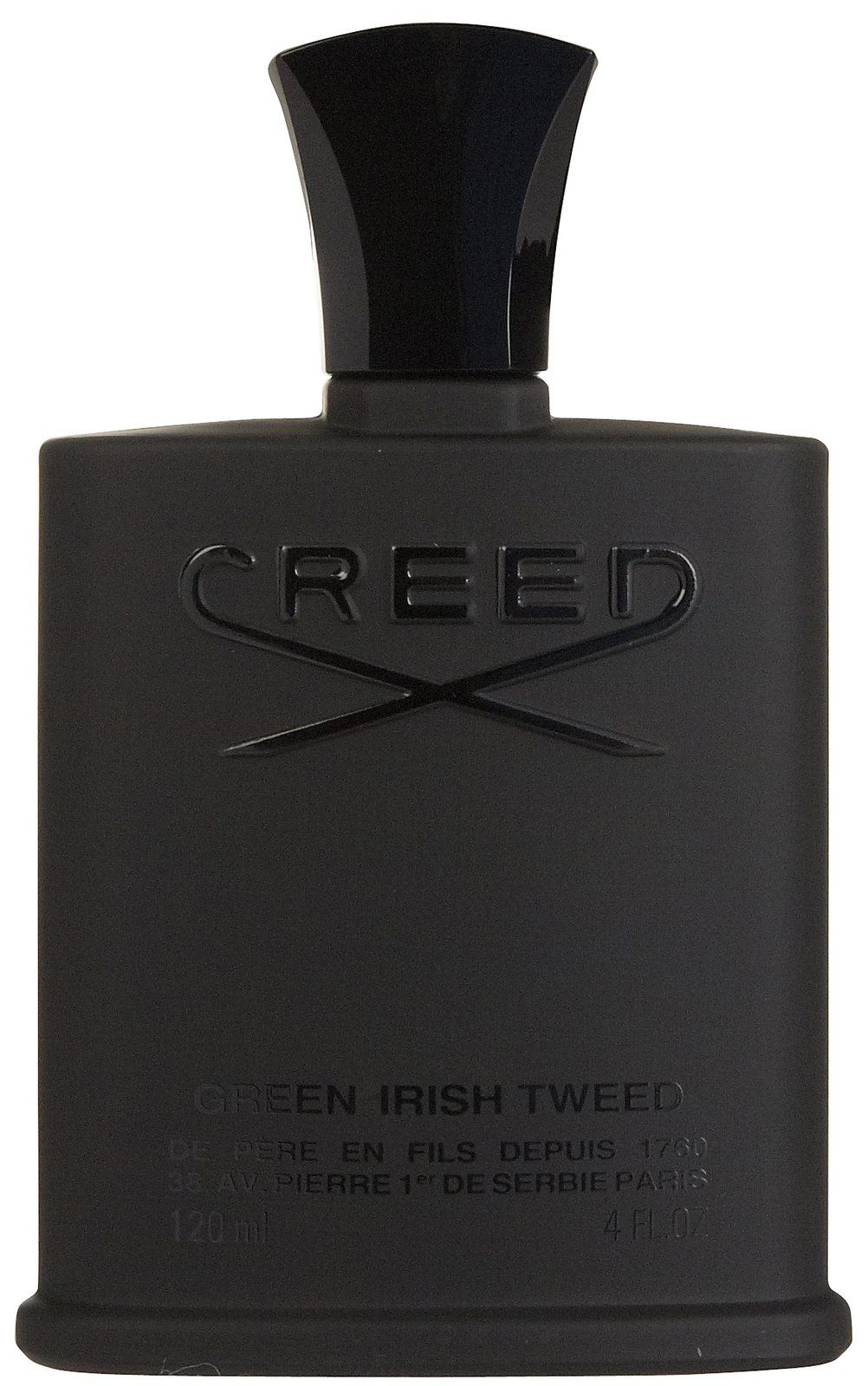
Lemon verbena, violet leaf and iris over sandalwood and ambergris, launched in 1985. It made Creed’s name and prefigured Cool Water.
At a glance
Green Irish Tweed is a Creed fragrance launched in 1985. It is a cool, green fougère of lemon verbena, violet leaf and iris over sandalwood and ambergris, and it is widely attributed to the perfumer Pierre Bourdon.
It was the fragrance that turned Creed into a significant name, above all in the United States, and it set the template for the fresh green fougères of the following decade.
Creation and context
Creed presents itself as a London tailoring house founded in 1760 that later supplied perfume to European courts. That history is not supported by documentary evidence, and researchers place the start of the modern fragrance business in the 1970s under Olivier Creed. Green Irish Tweed is where the house becomes important on the record rather than in its own telling.
Authorship is the second question. Creed has generally presented its fragrances as the work of the Creed family, and some databases credit Olivier Creed alongside Pierre Bourdon. Bourdon, however, has claimed Green Irish Tweed as his own, and industry consensus accepts him as its author. He is best known for Davidoff Cool Water (1988), which several accounts describe as a reworking of the same structure.
Creed’s advertising later claimed that Cary Grant wore Green Irish Tweed, and the story is often retold as the fragrance having been made for him. Grant died in 1986, a year after the launch, and the claim appeared only after his death. There is no independent confirmation, so treat it as marketing.
The name and the presentation lean on a country-estate image of Irish tweed and green fields. The launch of the fragrance on the American market in 1985 is what made its reputation.
The composition
Green Irish Tweed has a short, clear note list, and the major databases and reviews agree on its outline. Its character is green, cool and slightly powdery, with a clean woody base.
The structure is a modern fougère: a fresh, aromatic top over a woody, ambery base. It drops the heavy coumarin and oakmoss of older fougères in favour of violet leaf and a cleaner base, which is what made it feel new in 1985. Perfume Shrine suspects geranium in the heart as well; that is a reviewer’s reading, not a published note.
Why it matters
Commercially, Green Irish Tweed was Creed’s breakthrough. It became the fragrance most closely identified with the house in the United States and gave Creed the standing on which Aventus (2010) later built.
In the history of style it matters more. The green, violet-leaf fougère was a change of direction in a decade dominated by dense, powerful fragrances. Three years later Bourdon’s Cool Water took a closely related structure, added a marine note built on calone, and sold it at mass-market prices. That line, from Green Irish Tweed through Cool Water, is one of the main roots of the fresh and aquatic fragrances of the 1990s.
It is also a useful lesson in reading perfume history critically. Almost every famous story attached to Green Irish Tweed, from the eighteenth-century heritage to Cary Grant, comes from the house’s own marketing, while the facts that are securely documented, the 1985 date and Bourdon’s role, are the least romantic.
Reformulation and editions
Green Irish Tweed is sold in a single concentration, which Creed currently labels eau de parfum. Creed has not published formula changes, but collectors routinely discuss differences between batches, and the house’s small-batch presentation encourages that. Treat claims about particular batch codes as enthusiast opinion.
Ownership has changed recently: Kering bought Creed in 2023, and Kering later agreed to sell its beauty division, Creed included, to L’Oréal. The effect of these changes on the formula, if any, is not documented.
Wearing it today
Expect a crisp, lemony-green opening, then a cool violet-leaf heart and a clean, soft woody base. It is easy to wear in most settings and seasons, and it suits anyone who likes green or fresh fragrances. If you know Cool Water, try the two side by side: the family resemblance is obvious, and Green Irish Tweed is the drier, greener, less marine of the two.
Comments
2 responses to “Creed Green Irish Tweed”
[…] Creed – Green Irish Tweed […]
[…] Creed – Green Irish Tweed […]