
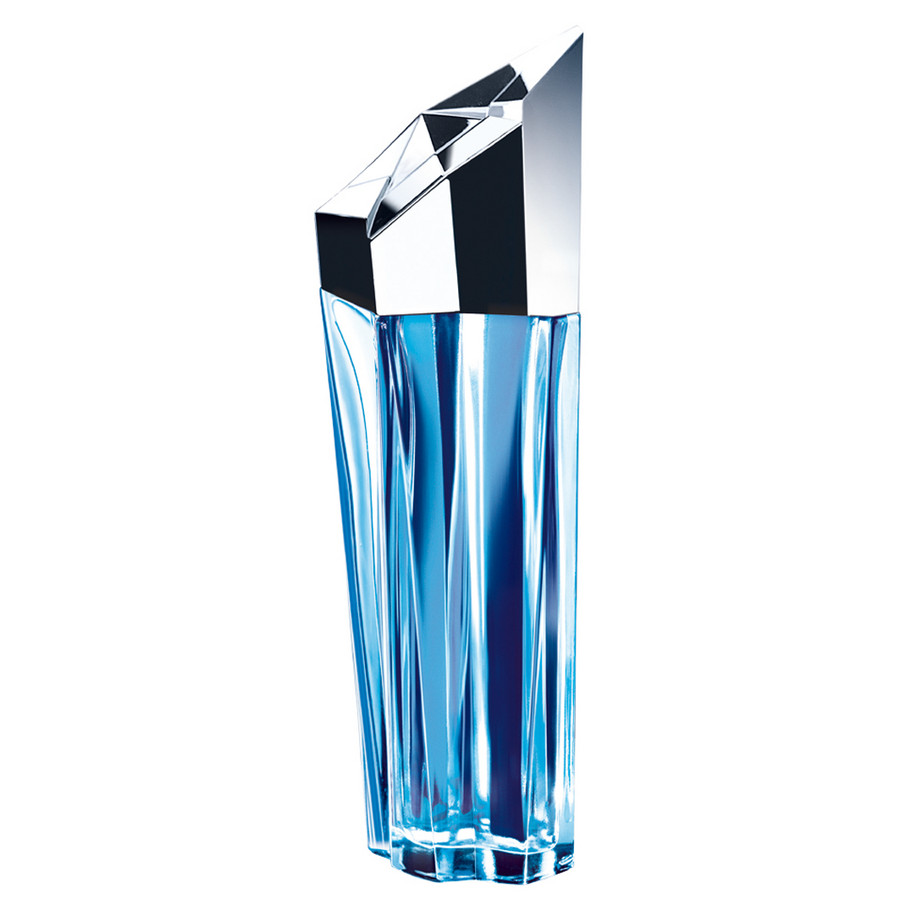
Ethyl maltol against a heavy dose of patchouli, launched in 1992. It founded the gourmand family and came in a refillable star.
At a glance
Angel is a Thierry Mugler perfume launched in 1992, composed by Olivier Cresp and Yves de Chiris. It sets a large dose of ethyl maltol, the candyfloss-and-caramel synthetic, against an equally heavy patchouli base, with honey, red berries, vanilla and chocolate notes over a floral top.
It is the fragrance credited with founding the gourmand family, and it was also the first major perfume sold in a refillable bottle from its launch.
Creation and context
Angel was Thierry Mugler’s first fragrance. The designer was known for theatrical, sculptural couture, and the perfume was developed with the Clarins group, which had taken a stake in his fashion house in return for developing its fragrances. Vera Strubi ran the fragrance business and steered the project.
The brief came from Mugler’s own scent memories. The accounts agree on the fairground of his childhood: candyfloss, caramel and chocolate, with cakes and other sweets in some tellings. Cresp and de Chiris took that literally, which was the radical part. In the early 1990s fine fragrance was moving toward clean, transparent florals and aquatics, and an edible, sugary perfume was far outside the norm.
The bottle was designed to match: a faceted star, reflecting Mugler’s long attachment to star imagery, filled with a blue juice. It was also made to be refilled. From 1992, customers could take the bottle back to a fountain in store and refill it, and the house still runs the programme.
The launch was slow. Angel is reported to have lost money for about two years before it caught on, and it was not an immediate hit. It then became one of the best-selling women’s perfumes in France and entered the Fragrance Foundation’s FiFi Hall of Fame in 2007.
The composition
Angel is often described as a perfume with no florals. That is not accurate. The documented structure opens on bergamot with jasmine and the floral synthetic helional, and some note lists also include rose and lily of the valley. The florals are not the subject, but they are there, and they give the top its airy lift before the sugar and patchouli take over.
The balance between those two materials is the whole idea. On its own the ethyl maltol would be confectionery; the earthy, camphorous patchouli makes it strange and wearable. The house now places Angel in the amber gourmand family, and the tension between the dessert notes and the patchouli is why it wears so easily on anyone.
Why it matters
Angel created a family. Before 1992, edible notes such as vanilla, caramel or chocolate were accents in fine fragrance; after Angel they could be the subject of the composition. The gourmand category that dominates much of mass-market perfumery today, from praline and caramel accords to the sweet designer blockbusters, descends from it directly or indirectly.
It also proved that a single synthetic, used in overdose, could carry a perfume’s identity, much as aldehydes had done for Chanel No. 5 seventy years earlier. And it showed that a divisive fragrance could become a best-seller: Angel has always had as many detractors as admirers, and its success came in spite of that.
Its refillable bottle was decades ahead of the industry’s current interest in refills. The longer story of the brief, the launch and the people behind it is told in The History of Angel.
Reformulation and editions
Angel is sold as an eau de parfum and a parfum, and the name has carried a long line of flankers, including Angel Muse (2016, by Quentin Bisch), Angel Elixir and Angel Nova. Clarins sold the Mugler fragrance business to L’Oréal, which now produces it.
Like any fragrance of its age and volume, Angel has been adjusted over time, and collectors compare older and newer bottles. The house has not published a formula history, so specific claims about reformulations are unverified.
Wearing it today
Expect a sharp, airy opening that turns within minutes into caramel, honey and patchouli, then a drydown that lasts all day and fills a room. It is very strong, so one or two sprays are enough. If you know only its sweet imitators, try the original: the patchouli makes it far darker and stranger than its reputation suggests.
Comments
3 responses to “Thierry Mugler Angel: The First Gourmand Perfume”
[…] Angel […]
[…] Angel […]
[…] Angel […]