
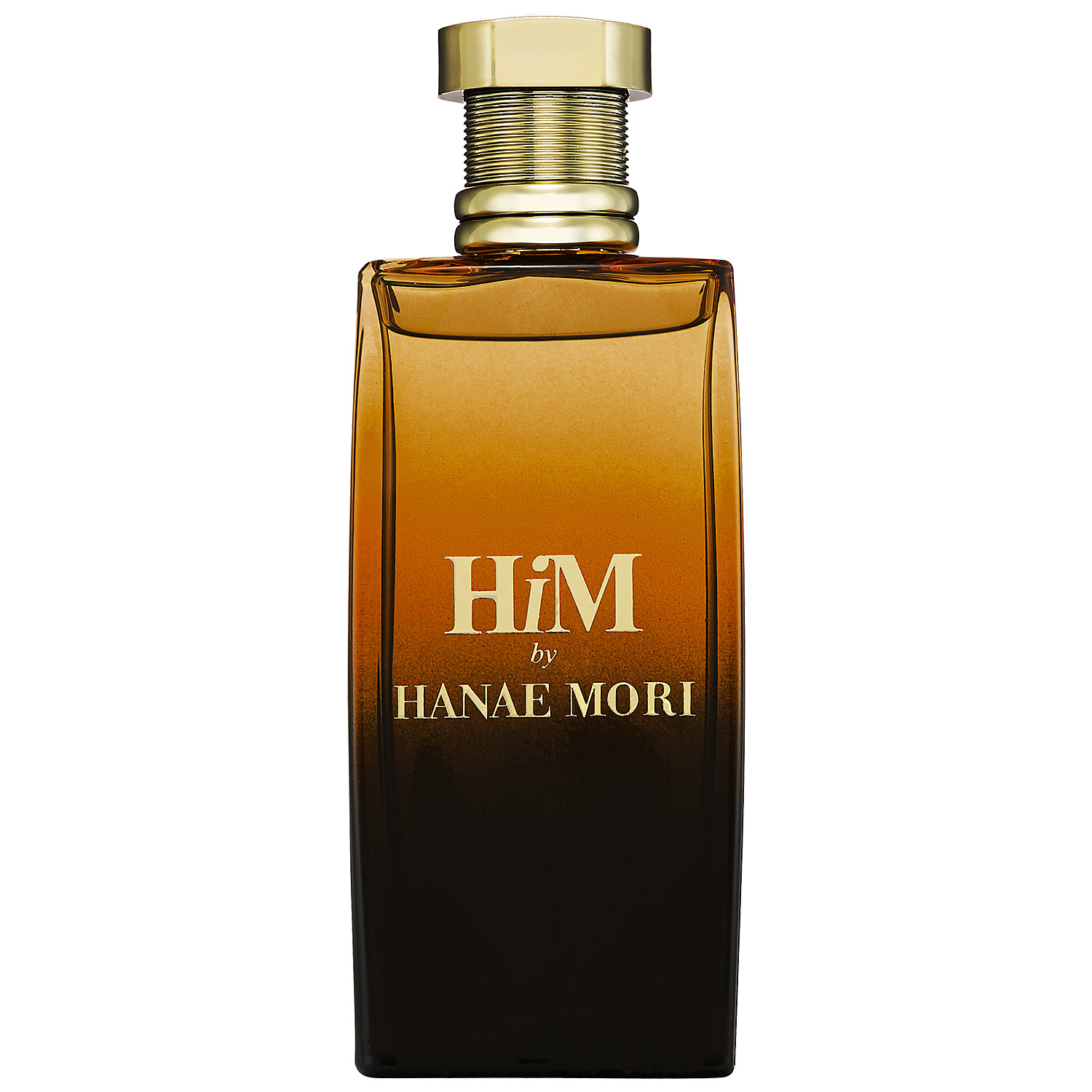
Hanae Mori’s 2012 spicy woody fragrance: pepper and cardamom over cinnamon, tonka, teak and fir balsam.
At a glance
HiM is a spicy woody fragrance from Hanae Mori, launched in 2012. It opens on bergamot, mandarin, pepper and cardamom, moves to a warm heart of cinnamon, fig and tonka bean, and dries down to teak, white cedar, fir balsam, musk and amber.
It is a different fragrance from the house’s better-known HM (1997), and the two should not be confused. No perfumer has been credited publicly.
Creation and context
Hanae Mori (1926–2022) was a Japanese couturier who joined the Paris haute couture in 1977 and built a business that reached into perfume as well as fashion. By 2012 the fragrances were produced under licence. According to Fragrantica’s launch report, the licensee was ICP, whose president Thomas Saujet said the aim was a rugged, edgy, spicy, woodsy and modern fragrance.
Fragrantica, Parfumo and Olfastory all date HiM to 2012, and Fragrantica places the launch in the autumn of that year. The same report says it was first sold exclusively at Nordstrom in the United States and Holt Renfrew in Canada before moving into wider department-store distribution.
Olfastory describes HiM as the house’s follow-up to HM. Where HM had been sweet and gourmand, HiM was pitched as darker and spicier, and its caramel-coloured bottle, described by both Fragrantica and Olfastory, signals the change.
The composition
Hanae Mori has not published the formula. The pyramid below is the one given, with only small differences in naming, by Fragrantica, Parfumo and Olfastory.
The interest is in the contrast Olfastory points to: citrus and violet leaf on top against a heart where cinnamon and tonka carry most of the weight. Fir balsam adds a resinous, faintly jammy note to the woods. Parfumo’s community classes the result as spicy-woody; Fragrantica’s accords lead with warm spicy and woody.
Why it matters
HiM is not a landmark in the historical sense. Its interest is as a late chapter in the fragrance business of one of the first Japanese designers to work in Paris couture, and as an example of how licensed designer lines continued well after the founder stepped back from fashion.
It also shows a common pattern in 2010s designer fragrance: warm spices, tonka and woods presented in an approachable, department-store form. Cinnamon and tonka in the heart link it loosely to the oriental tradition, while the teak, cedar and fir keep it on the woody side.
For anyone who knows only HM, HiM is a useful comparison. Both come from the same house, but HM is a sweet fougère with vanilla and chocolate, while HiM relies on spice and wood rather than dessert notes.
Reformulation and editions
Parfumo lists HiM as both an eau de parfum and an eau de toilette, each dated 2012 and each still in production. Fragrantica’s launch report gives 50 ml and 100 ml bottles at $50 and $95, which placed HiM in the mid-priced designer bracket rather than the luxury tier. No flankers are documented.
No reformulation has been reported. Because HM and HiM share a house and similar names, check the box and bottle carefully when buying: HM comes in a tall frosted-glass bottle, HiM in a caramel-toned one.
Wearing it today
Expect a peppery citrus opening, a warm cinnamon and tonka heart and a dry, resinous wood base. It is best in autumn and winter and for evenings, where the spice and amber have room to develop. Two or three sprays are enough; the cinnamon can dominate if you overapply. Parfumo’s users rate its longevity above average and its projection moderate, so it suits the office as well as evenings out.
If you like spicy woods but find HM too sweet, HiM is the one to try. If you prefer fresher daytime scents, sample it on skin before buying a full bottle.