
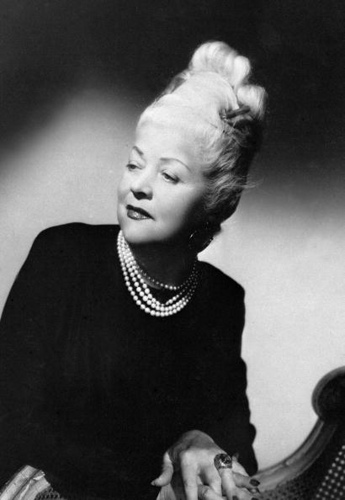
Designer on Fragrance
Nina Ricci, founder of the Parisian fashion house that carries her name, treated fragrance as an emotional creation first and a product second — a romantic philosophy that shaped one of perfumery’s most enduring releases.
In Her Own Words
“The creation of a perfume is an act of love, whether real or imaginary. I am romantic. I couldn’t imagine living without dreams.”
— Nina Ricci
Romance as a Creative Method
Ricci’s quote treats perfume-making as an emotional act rather than a technical or commercial one — love, whether directed at a real person or an imagined ideal, as the actual raw material of a fragrance. That romantic framing is part of why her house’s fragrances carried such a distinct, dreamlike identity rather than feeling formulaic.
The House’s Defining Fragrance
Nina Ricci’s most iconic release, L’Air du Temps, became one of the most recognized fragrances of the 20th century — famous both for its scent and for its Lalique-designed bottle topped with a pair of doves. It’s a fitting expression of Ricci’s philosophy: a perfume built to feel like a dream rather than simply a product.
Continue Exploring
Related Fragrance Help Reading
Frequently Asked Questions
What is Nina Ricci’s most famous fragrance?
L’Air du Temps, known for both its scent and its iconic Lalique dove-topped bottle.
How did Nina Ricci describe the act of creating perfume?
As an act of love, whether real or imaginary, rooted in a romantic, dream-driven approach to design.