
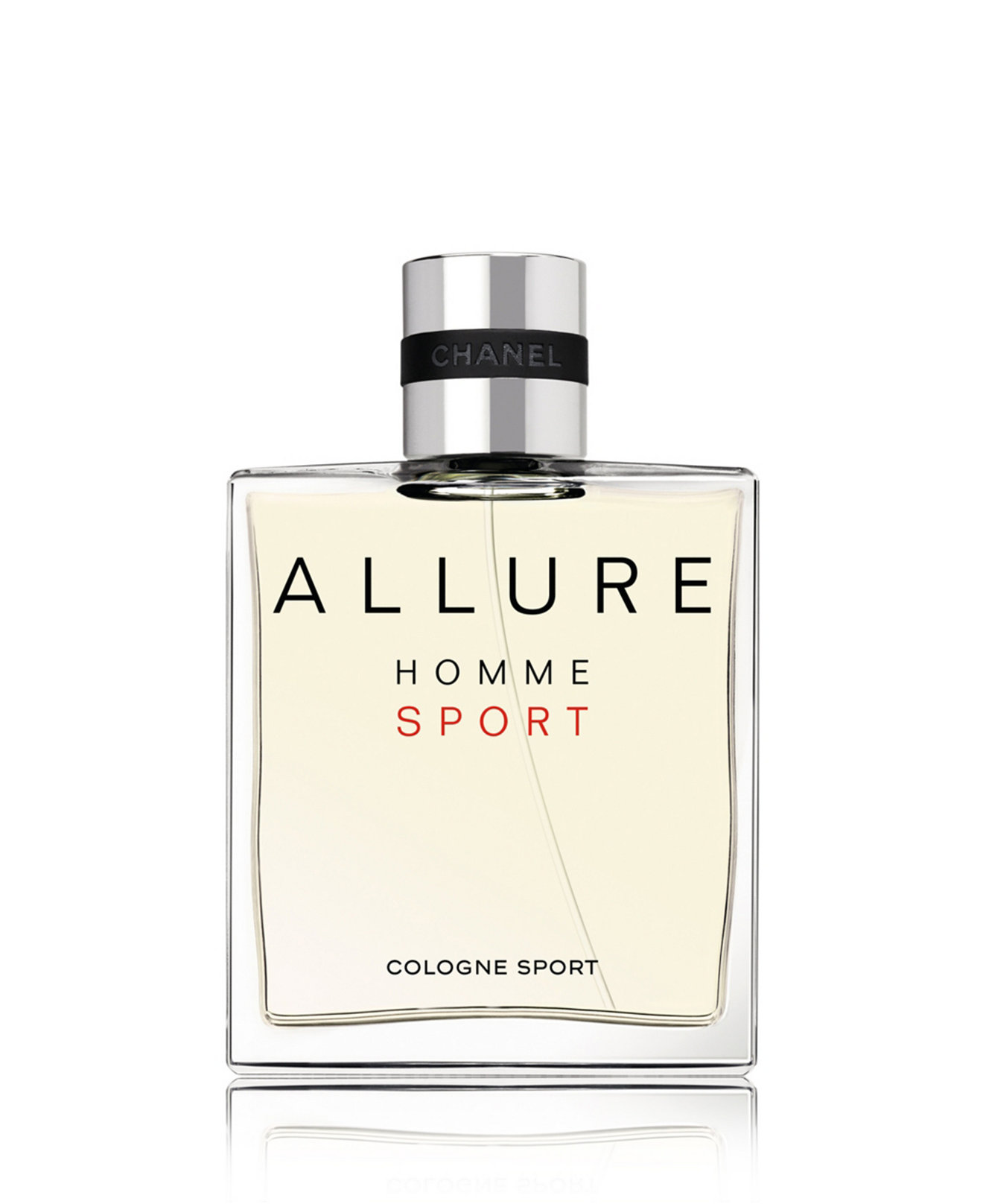
Chanel’s 2007 citrus cologne for the Allure Homme Sport line by Jacques Polge: citrus and aldehydes over elemi, cedar and white musk.
At a glance
Allure Homme Sport Cologne is a 2007 flanker of Allure Homme Sport, composed by Jacques Polge, Chanel’s in-house perfumer. It is a bright citrus aromatic: a stack of citrus fruits lifted by aldehydes and neroli, a lightly spiced heart of elemi resin, and a clean base of cedar, vetiver and white musk.
Chanel still sells it under the name Allure Homme Sport Cologne, alongside the original Sport eau de toilette and the Eau Extrême.
Creation and context
Chanel launched Allure Homme in 1999 and the Sport version in 2004. The Cologne followed in 2007 as the lightest member of the Sport line. Wikipedia’s list of Polge’s work, Fragrantica and Parfumo all date it to 2007 and credit it to Polge.
Chanel’s own description, quoted by Fragrantica, calls it “Allure in motion” and “a boost of well-being for the active man”, with “a generous citrus freshness … subtly heightened by spicy Lovage and Elemi notes and set against a backdrop of Cedar and White Musk”.
Parfumo credits the bottle design to Jacques Helleu and names the Spanish model Andrés Velencoso as the face of its advertising campaign.
The composition
Chanel has not published a formula. Fragrantica and Parfumo list nearly the same pyramid; the materials below appear in both.
Fragrantica adds fir resin and specifies Atlas cedar; Chanel’s own copy names lovage, which neither database lists. Fragrantica classifies it as a citrus aromatic; Parfumo’s community rates it fresh and citrusy first, then spicy and woody.
Why it matters
The Cologne is Chanel’s modern reading of one of the oldest ideas in perfumery: the citrus-and-herb eau de cologne that Farina made famous in the eighteenth century. Polge dressed it with the house’s signature material, aldehydes, which Chanel had made famous with No. 5, and set it on a woody, musky base instead of the brief herbal finish of a classic cologne.
It also shows how the Sport line was built. Instead of stronger or lighter versions of one scent, Chanel released separate compositions under a shared name: the Cologne as the citrus option in 2007, and Eau Extrême in 2012 as the warmer, mintier one.
Reformulation and editions
Fragrantica reports that the Cologne was relaunched in 2016 in updated packaging with a nearly identical composition. Parfumo lists the original entry as apparently discontinued; Chanel’s site still sells Allure Homme Sport Cologne, which fits a repackaging rather than a withdrawal.
Polge was Chanel’s head perfumer from 1978 to 2015, according to Wikipedia; his son Olivier Polge joined him at Chanel in 2013. The Sport line has continued under Olivier: the Allure Homme profile lists Sport Superleggera (2024) as his work. The Cologne therefore belongs to the last decade of the elder Polge’s tenure, alongside the Eau Extrême and Bleu de Chanel.
Chanel has not published a reformulation history. When comparing them side by side, the Cologne’s grapefruit-and-lemon opening is sharper and more bitter than the orange-led original Sport eau de toilette, and it has none of the Eau Extrême’s mint.
Wearing it today
Expect a burst of mixed citrus with a soapy aldehydic lift, a peppery resin heart and a clean cedar and musk drydown. Parfumo users rate its longevity and sillage well below those of the Eau Extrême, as expected for a cologne.
It suits hot weather, the gym bag and daytime wear, and it is an easy choice for anyone who finds the original Sport too sweet in the drydown. Reapply after a few hours, or choose the Eau Extrême if you want more staying power.